
Summary
- Bakeries, confectioners and small food manufacturers do not buy dates the way a retailer does. For them, the date is an ingredient: what matters is how it behaves in the recipe, how consistent it is from one lot to the next and how easily it fits into the production line.
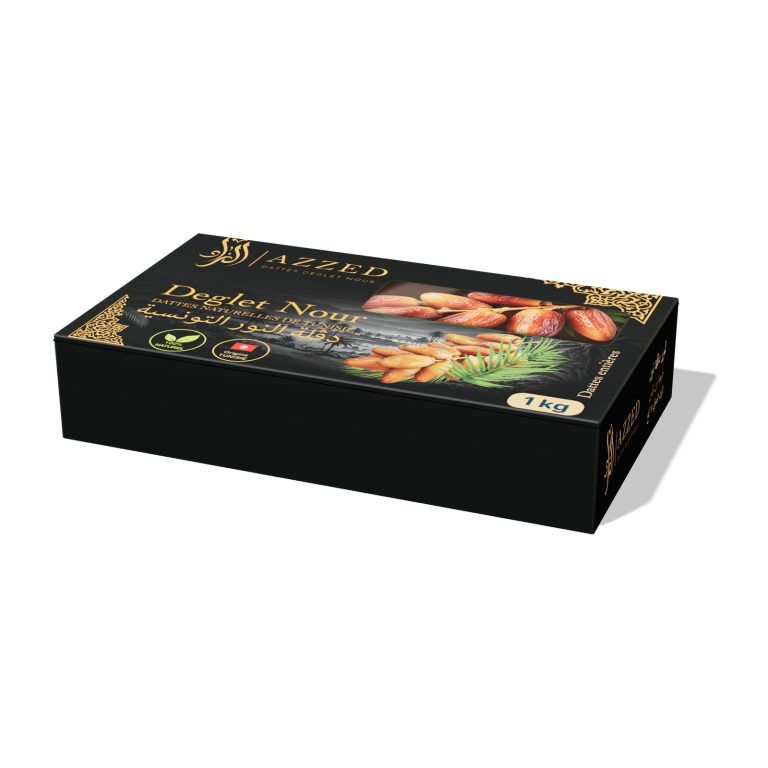
- For ingredient use, the forms that usually make sense from Azzed are standard Deglet Nour dates (whole, loose) and pitted dates on request. Branch dates and the Arjoun are presentation products and rarely the right choice for a production kitchen.
- Azzed sells whole fruit only. We do not make processed products such as syrup, spreads or fillings: your team prepares its own preparation from the dates, in your own kitchen, to your own recipe.
- Texture and moisture vary naturally with the harvest, the storage time and the conditions in transit. Instead of chasing a perfect number, agree on a reference sample and a short written description of what you accept.
- Before a first order, agree on a simple specification sheet: form, pitted or whole, crop year, packaging, tolerance for small defects, labelling of cartons and lot identification.
- Storage at the plant is part of the specification: cool, dry, away from strong odours, first in, first out.
- Azzed is a local Tunisian brand from Douz and Kébili. We are not a large exporter, but we study every request, including small and mid-sized ones. Request a quote or message us on WhatsApp at +216 52 146 101.
Who this guide is for
This article is written for food businesses outside Tunisia that use dates as a raw material rather than selling them as they are:
- artisan and industrial bakeries making date bread, date rolls, filled pastries or cookies;
- confectioners and chocolate makers working with dates in bars, bites or coated fruit;
- small food manufacturers producing snack bars, energy balls, breakfast products or ready desserts;
- pastry workshops specialising in North African and Middle Eastern sweets, such as makroudh or ma’amoul, that need a regular supply of fruit for their own fillings;
- caterers and central kitchens that prepare date-based items in volume.
If you are a retailer or a delicatessen, our guide on selling Tunisian Deglet Nour in a specialty grocery will be more useful. If you are an importer planning retail packs, see the article on retail packaging and labelling.
Tunisia is one of the world’s major date producers, and Deglet Nour from the oases of the south is its best-known variety. For an ingredient buyer, that means the fruit is available every season. The real work is elsewhere: choosing the right form, describing it precisely and making sure the second order behaves like the first.
Why Deglet Nour works as an ingredient
Deglet Nour is often called a semi-soft or semi-dry date. In practical terms, for a production kitchen, that brings a few useful properties:
- A firm but tender flesh. It holds its shape when chopped and does not turn into a sticky mass as quickly as very soft varieties. That makes it easier to dice, to fold into a dough or to portion.
- A delicate, honey-like sweetness. The flavour is present without being overpowering, which leaves room for spices, nuts, citrus or chocolate.
- A light, translucent colour. Good Deglet Nour has an amber tone that looks attractive in a cut cake or a filled pastry.
- A fruit that softens well. Many workshops soak, steam or gently cook the fruit before mixing it to the texture they want. Deglet Nour responds well to that kind of preparation.
If you are hesitating between varieties, our comparison Deglet Nour vs Medjool explains the main differences. For ingredient use, the short version is simple: Medjool is large, very soft and usually positioned as a premium eating date; Deglet Nour is more versatile in the kitchen and generally a more practical choice when the fruit is going to be transformed.
Which form fits your production
The first question in any ingredient RFQ is not the price. It is the form of the fruit. Here is how the Azzed range maps to typical uses.
Standard dates: the usual starting point
Standard dates are loose Deglet Nour, detached from the strand and packed in cartons. For most bakeries and manufacturers, this is the natural choice:
- the fruit is ready to be pitted, chopped or soaked by your team;
- cartons are easy to stack, store and open on the line;
- there is no stem or strand to remove.
Some workshops prefer to pit the dates themselves, because they control the result and can check each fruit as it is opened. That is a good habit for a first order, even if you plan to move to pitted dates later.
Pitted dates, on request
Pitted dates save labour, especially for small teams that do not have pitting equipment. Azzed can supply pitted dates on request, discussed case by case in the quote. Before asking for them, consider:
- Your volume and your labour. If pitting by hand takes your team several hours a week, pitted fruit may be worth discussing.
- Your quality control. Even with careful pitting, any process can occasionally leave a stone or a fragment. Most manufacturers keep a check step on their side, for example a visual check or a manual sort before mixing, whatever the supplier. Agree in writing on what you expect and how a complaint is handled.
- Storage time. Pitted fruit is opened fruit. It is generally more sensitive to drying out, to stickiness and to handling than whole dates, so plan shorter storage and good closing of opened cartons.
Branch dates and Arjoun: rarely for the line
Branch dates (fruit still attached to the strand) and the Deglet Nour Arjoun (the whole bunch, up to about 20 kg) are presentation products. A bakery might order a few for a shop counter, a seasonal display or an event table, but they are not designed for a production line. You would pay for a presentation you then remove.
What Azzed does not supply
To avoid any misunderstanding at the RFQ stage:
- Azzed does not make processed date products such as syrup, spreads, fillings, flakes or powders;
- Azzed sells Deglet Nour only, not other date varieties;
- Azzed does not prepare custom recipes or mixes.
If your recipe needs a prepared filling, the usual approach with Azzed is that your team prepares it from whole or pitted fruit. Many artisan pastry makers prefer it that way, because the texture, the spices and the sweetness stay under their control.
Quick reference table
| Your use | Form that usually fits | Points to agree in the quote |
|---|---|---|
| Date bread, rolls, cookies with chopped dates | Standard dates, whole or pitted on request | Size of fruit, tolerance for dry or broken fruit |
| Filled pastries (makroudh, ma’amoul and similar), own filling prepared in-house | Standard dates, pitted on request if useful | Softness, cleanliness of the fruit, pitting tolerance |
| Snack bars, energy balls, bites | Pitted dates on request | Stickiness, storage time once opened |
| Coated or stuffed dates (chocolate, nuts) | Standard dates, whole; pitted on request | Even size, intact skin, appearance |
| Counter display or seasonal event | Branch dates or Arjoun | Quantity, delivery window, presentation |
| Prepared filling, syrup or spread | Not supplied by Azzed | Prepare it yourself from whole or pitted fruit |
Texture and moisture: what to discuss in general terms
Dates are a natural product. Their texture is not fixed: it depends on the harvest, the position of the fruit on the bunch, the time since picking and the conditions during storage and transport. For an ingredient buyer, three practical points matter.
Moisture changes the behaviour in the recipe
A softer, moister lot will blend more easily but may stick to blades and make a dough wetter. A drier lot will hold its shape when diced but may need soaking or steaming before it can be mixed smoothly. Neither is a defect in itself; it is a difference you need to anticipate.
Rather than asking for a precise figure you cannot verify yourself, many small manufacturers describe the texture they need in words, for example “soft but not sticky, holds its shape when diced”, and agree on a reference sample that both sides keep.
The season changes the fruit
The Deglet Nour harvest in Tunisia generally runs from October to December. Fruit from the new crop is usually at its softest early in the season. Fruit stored for several months tends to become firmer and drier, even under good conditions. If your recipe is sensitive to texture, plan for small adjustments over the year: a little more soaking time later in the season, for example.
Our harvest calendar for importers explains the season month by month.
Transport and storage change it too
Heat, humidity and temperature swings during transit affect dates more than the distance itself. Condensation inside cartons, or long periods in a hot warehouse, can make fruit sticky or encourage surface sugar crystals. Ask your forwarder about the route and the timing, and plan reception quickly at your end. The shipping guide for first-time importers covers transit and packaging in more detail.
Consistency between lots: the real challenge
For a bakery or a manufacturer, the second order is more important than the first. A recipe validated on one lot must still work on the next. Complete uniformity is not realistic with a fruit, but you can reduce surprises.
Keep a reference
- Keep a few kilos of your approved sample or first lot in good storage, labelled with the date and lot information.
- Take photos of the fruit, whole and cut, in natural light.
- Write down the result in your recipe: soaking time, behaviour in the mixer, appearance after baking.
When the next lot arrives, compare it with that reference before releasing it to production.
Agree on a short description
A written description is more useful than an adjective like “premium”. For example:
- variety: Deglet Nour, Tunisia;
- form: whole loose fruit, or pitted on request;
- crop year: current harvest, or as agreed;
- appearance: amber colour, intact skin for most of the fruit;
- texture: soft to semi-firm, as per reference sample;
- tolerances: small proportion of dry, broken or misshapen fruit accepted, to be agreed;
- foreign matter: none expected, any complaint documented with photos;
- packaging: cartons of an agreed net weight, lot identification on each carton.
Keep it short and realistic. A sheet that both sides can actually check is worth more than a long document nobody uses.
Order regularly rather than in one large lot
For a small manufacturer, smaller and more regular orders often give better consistency than a single large purchase stored for many months. Each delivery is closer to the harvest, and you adjust the recipe in small steps. Discuss the rhythm with your supplier at the quote stage: it also helps the supplier plan.
Samples and specs to agree before ordering
Samples are the moment when an ingredient buyer and a supplier understand each other. We have a dedicated article on evaluating Deglet Nour samples before a first order, so here we only add the points specific to ingredient use.
- Test in the recipe, not only on the table. Tasting the fruit is useful, but the real test is a production trial: soak, chop, mix, bake, store the finished product for its normal shelf life, and observe.
- Test at the scale of your equipment. A fruit that behaves well in a small kitchen mixer may behave differently in a larger machine.
- Involve the person who will use the fruit every day. The baker or line operator often spots a texture issue faster than the buyer.
- Write down what you approved. After the trial, send the supplier a short summary: what worked, what you would like to keep, what you would change.
- Ask about the packaging of the real order. The sample may arrive in a small bag; the order will arrive in cartons. Agree on carton size and weight in advance, because it affects handling on your line.
Storage at the plant
Good storage keeps the fruit close to what you approved. Our article on storing Deglet Nour in an importer’s warehouse covers storage conditions and stock rotation in detail. For a bakery or a small plant, a few habits make the difference:
- Store cool and dry, away from ovens, proofers and dishwashers, which bring heat and humidity.
- Keep dates away from strong odours such as spices, onions or cleaning products. Dates can absorb smells.
- Raise cartons off the floor and leave space for air to circulate.
- Close opened cartons carefully, or transfer the fruit into clean, closed food containers labelled with the lot information.
- Apply first in, first out. Use the oldest received lot first, and write the reception date on each carton.
- Keep pitted fruit for shorter periods than whole fruit, and check it more often.
- Inspect regularly. Look for stickiness, surface sugar, unusual smells or any sign of pests, and isolate any doubtful carton before it reaches production.
Your own food safety plan and local rules apply to how ingredients are received, stored and traced in your plant. Check them with your usual adviser or authority.
How to request a quote as an ingredient buyer
The general method for writing a request is covered in How to Write a Request for Quotation for Tunisian Dates, and the factors that move the price are explained in what makes an export quote go up or down. For an ingredient buyer, add these points to your message:
- Your business and your use. “Artisan bakery making date rolls and filled pastries” tells the supplier much more than “food company”.
- The form you need. Standard dates, whole, or pitted on request.
- The texture you are looking for, described in words, and whether you can send a photo of what you currently use.
- Your volumes and rhythm. A first trial quantity, then an estimate of regular needs: monthly, quarterly or seasonal.
- Your peak periods. Ramadan, year-end, wedding season or any local festival that drives your production.
- Packaging and handling. Preferred carton size and weight, and whether pallets are needed.
- Lot identification. How you want cartons marked so you can trace each delivery.
- Destination and Incoterm, or “please suggest”.
- Samples, with the address where your production team can test them.
Payment conditions are agreed in the quote. If you are preparing a first order with a small supplier, our article on payment terms for a first export order explains the usual options.
Common mistakes when buying dates as an ingredient
Choosing on price alone
A cheaper lot that needs longer soaking, more sorting or more waste can cost more in labour than it saves on the invoice. Compare the cost of the fruit as used, not only as bought.
Validating the recipe on one lot only
If a recipe only works with one exact texture, every new lot becomes a risk. Build a little flexibility into your process, such as an adjustable soaking time.
Asking for a product the supplier does not make
Asking a fruit supplier for a ready-made filling or syrup wastes time on both sides. With Azzed, the answer is clear from the start: whole fruit or pitted fruit on request, and your team prepares the rest.
Forgetting the peak season
Ordering in the weeks just before Ramadan, when demand is highest everywhere, leaves little room for samples, adjustments or delays. Our Ramadan 2027 planning guide helps you work backwards from your production dates.
Poor storage after reception
A good lot stored next to an oven for a month will not behave like the sample. Reception and storage are part of the quality you buy.
How Azzed works with ingredient buyers
Azzed is a local Tunisian brand of Deglet Nour from the oases of Douz and Kébili, in the Nefzaoua region. We are honest about our position: we are not yet well established in export, and we do not claim volumes, destinations or customer references. What we offer is direct contact and a careful answer.
- We study every request, including a first trial order from a small bakery or a mid-sized manufacturer.
- We quote for our whole range: standard dates, branch dates, Arjoun and pitted dates on request. See our Products page.
- We say clearly what we do not do, such as processed products, other varieties or custom recipes, so you can plan the rest of your supply chain.
- We tell you what is realistic on packaging, timing and documents before the order, not after.
You can read more about how we select and pack the fruit on our Quality page and about our approach to foreign buyers on our Export page.
Frequently Asked Questions
Which Azzed product is best for a bakery?
In most cases, standard Deglet Nour dates, either whole or pitted on request. They are loose, easy to store and ready to be prepared by your team. Branch dates and Arjoun are presentation products.
Does Azzed supply date syrup or ready-made fillings?
No. Azzed does not make processed date products such as syrup, spreads or fillings. We supply whole Deglet Nour dates and pitted dates on request; your team prepares its own filling.
Can you guarantee the same texture in every lot?
No supplier of a natural fruit can promise identical texture all year, because the harvest and storage time influence it. What we can do is agree on a reference sample and a written description with you, and discuss any lot that does not match it.
Are pitted dates always free of stones?
Pitting is done carefully, but most food manufacturers keep their own check step before mixing, whatever the supplier. The expected tolerance and how a complaint is handled should be agreed in writing in the quote.
How should I store dates in my bakery?
Cool, dry, away from heat sources and strong odours, off the floor, with opened cartons closed and the oldest lot used first. Pitted dates are best kept for shorter periods than whole fruit.
Can a small bakery order from Azzed?
Yes. We study small and mid-sized requests. Describe your use, your first quantity and your expected rhythm, and we will reply with what is realistic.
How do I request a quote?
Use our contact form or message us on WhatsApp at +216 52 146 101, with your use, form, volumes, destination and sample address.
Conclusion
For a bakery, a confectioner or a small food manufacturer, buying Tunisian Deglet Nour is less about finding the fruit and more about describing it well: the right form for your line, a realistic texture description, a reference sample, a simple specification sheet and good storage once the cartons arrive. With those in place, the second order will behave like the first, and your recipe will stay stable through the season.
If you are looking for Deglet Nour from the oases of Douz and Kébili, as whole standard dates or pitted on request, we would be glad to study your project. Request a quote, browse our Products, or message us on WhatsApp at +216 52 146 101.
Read next: Evaluating Deglet Nour Samples Before Your First Order