Summary
- Dates are a robust fruit, but their quality after import depends heavily on how they are stored at destination. Many complaints attributed to the origin actually start in a warm, humid or badly ventilated storeroom.
- The four enemies of stored Deglet Nour are heat, excess humidity, temperature swings (which cause condensation) and storage pests. Strong odours nearby are a fifth, quieter risk.
- Cool, dry and stable is the rule. For longer holding, many importers use cold storage; for short periods, a cool, dry ambient store away from sunlight is often enough. Confirm the right conditions for your product and packaging with your supplier.
- Rotate stock on a first expired, first out basis, keep lot records, and run simple monthly checks on what is in stock.
- Each presentation has its own needs: standard dates, branch dates and Arjoun do not behave the same in storage.
- Planning a first order? Contact Azzed or message us on WhatsApp at +216 52 146 101, and tell us about your storage conditions: we take them into account in our advice.
Why storage at destination matters so much
When dates leave the oasis, the supplier’s control over them ends at some point defined by the Incoterm. After that, the fruit spends days or weeks in transit, then weeks or months in your warehouse, in a retailer’s back room and on a shelf. For many importers, the longest part of the fruit’s commercial life happens after arrival.
Deglet Nour is generally considered a semi-soft date. It contains natural sugars and a moderate amount of moisture, which is what gives it its supple texture and translucent look. That same moisture is what makes storage important: too warm, and the fruit darkens and can ferment; too humid, and mould becomes a risk; too dry, and it hardens; too many changes of temperature, and condensation forms on the fruit and inside the packs.
The good news is that the rules are simple, and most of them cost little. This guide explains them for small and mid-sized importers, wholesalers and specialty retailers who do not necessarily have a dedicated food technologist on staff.
If you have not yet received your goods, our article Shipping Tunisian Dates Abroad covers the transport part. This article picks up the story at your door.
The four main risks in storage
1. Heat
Heat accelerates almost everything that can go wrong with stored dates: darkening of colour, loss of the fresh, honeyed taste, sugaring (white crystals on the surface) and, in the worst cases, fermentation. A storeroom under a metal roof, next to a boiler or with a south-facing window can be much warmer than the rest of the building in summer.
2. Excess humidity
Dates are hygroscopic: they exchange moisture with the air around them. In a damp store, the surface of the fruit can become sticky, and the risk of mould increases, especially in packs that were already slightly soft. Cardboard cartons also lose strength in humid conditions, and collapsed cartons damage fruit.
3. Temperature swings and condensation
This is the risk most often underestimated. When cold dates are moved into a warm, humid room, water condenses on the cold surfaces, including on the fruit and the inside of plastic packs. Repeated condensation is a classic route to stickiness and mould. The same happens in reverse with a store that is warm by day and cold at night.
4. Storage pests
Dried fruit can attract storage insects, such as certain moths and beetles. Infestations usually start from a single neglected carton or from residues on shelves and floors. Cleanliness, closed packaging and regular checks are the first line of defence. For pest control treatments, rely on a professional service and on the rules of your country.
A fifth risk: odours
Dates can absorb strong odours. Storing them next to onions, garlic, spices, smoked products, cleaning chemicals or fuel is a bad idea, even in closed cartons.
Recommended storage conditions
The table below summarises general good practice. It is not a substitute for the advice of your supplier, your food safety adviser or the rules of your country, and the right conditions can depend on the packaging and the moisture level of the lot. Use it as a starting point for the conversation.
| Factor | General good practice | Signs of a problem |
|---|---|---|
| Temperature | Cool and stable; cold storage is often used for longer holding | Darkening, sugaring, sour or fermented smell |
| Humidity | Dry, well-ventilated air; avoid damp rooms | Sticky surface, soft cartons, mould spots |
| Temperature changes | Avoid moving cold goods straight into warm, humid air | Condensation inside packs, wet cartons |
| Light | Away from direct sunlight | Faded or uneven colour on exposed packs |
| Odours | Separate from onions, spices, chemicals, fuel | Off-taste, unusual smell on opening |
| Pests | Clean floors and shelves, closed packs, regular checks | Small holes, webbing, frass, insects |
| Stacking | Pallets off the floor and away from walls, within carton limits | Crushed lower cartons, damaged fruit |
| Air circulation | Space between pallets and walls | Hot spots, damp corners |
Cold storage or ambient storage?
There is no single answer. In general:
- Cold storage is widely used by the trade when dates must be held for several months, because low temperatures slow down darkening, sugaring and pest activity.
- A cool, dry ambient store can be adequate for fast-moving stock, for example goods that will be sold within a few weeks of arrival, provided the room stays cool through the season.
If you use cold storage, the key is the exit. Let goods come back to room temperature gradually and in their closed cartons, so that condensation forms on the outside of the carton rather than on the fruit. Ask your supplier or adviser how long to allow for your packaging.
Receiving goods: the first hour counts
Good storage starts at reception. When a shipment arrives:
- Check the transport conditions. Note the state of the container or truck, any smell, visible condensation or wet cartons.
- Inspect the pallets before signing. Photograph damaged or wet cartons and note them on the delivery documents, following your forwarder’s and insurer’s instructions.
- Open a few cartons from different pallets and compare the fruit with the sample you approved. Our guide How to Evaluate Deglet Nour Samples Before Your First Import Order explains how to build that reference.
- Record the lot references, the arrival date and the location in the warehouse.
- Move the goods quickly to their final storage area. Pallets left on a sunny loading dock for a day can lose part of the care taken during transport.
Stock rotation: FIFO, FEFO and lot records
First in, first out, or first expired, first out?
Most food warehouses use FIFO (first in, first out). For dates, FEFO (first expired, first out) is often more appropriate: what matters is the best-before date or the condition of the lot, not only the arrival date. Two lots that arrived a week apart can come from different harvest dates or packaging runs.
Keep simple lot records
Even a small importer can keep a spreadsheet with:
- the lot reference and best-before date shown on the packs;
- the presentation (standard, branch, Arjoun, pitted);
- the arrival date and storage location;
- the quantity received and the quantity remaining;
- the results of each check (see below).
These records make it easy to see which lot should leave first, and they are invaluable if a customer reports a problem: you can trace the lot and check the other cartons quickly.
Avoid the “back of the store” trap
The most common rotation failure is physical: new pallets are placed in front of old ones because it is easier. Organise the store so that older lots are accessible first, and label pallets clearly with the lot and date.
A simple monthly check routine
Set a fixed day each month, or more often during warm periods, to check stock. It takes less than an hour for a small warehouse.
- Walk the store and note temperature and any damp areas, smells or signs of pests.
- Open one carton per lot, preferably from a different pallet each time.
- Look and taste: colour, sugaring, texture, smell, any mould or insect activity.
- Check the cartons: strength, crushing, moisture.
- Write the result in your lot records, with a photo if anything changes.
If a lot shows early signs of ageing, such as darker colour or light sugaring, move it forward in your sales plan. It is far better to sell it quickly, perhaps as a promotion or to a food service customer, than to discover it unsellable later.
Storage by presentation
Standard dates
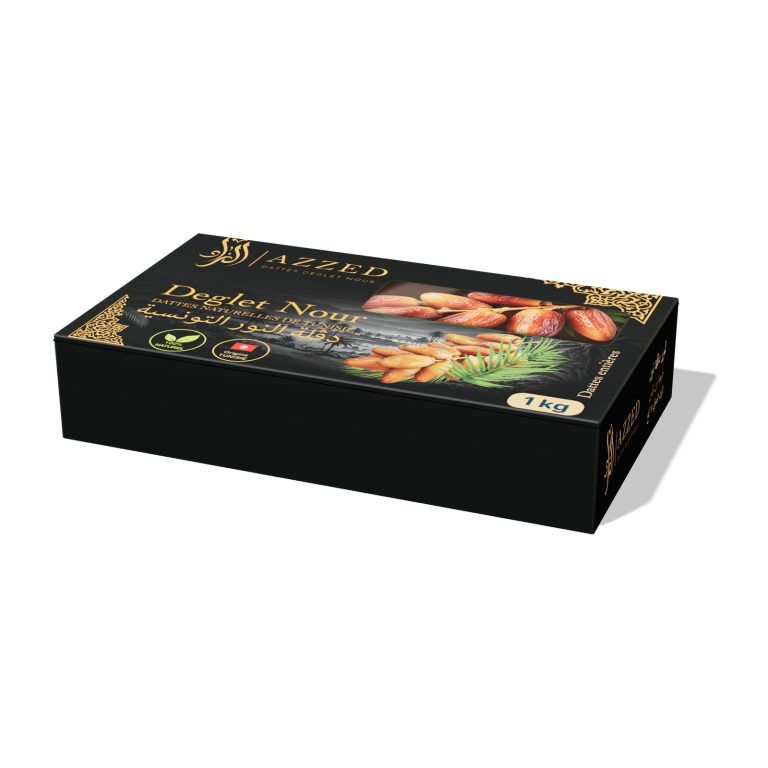
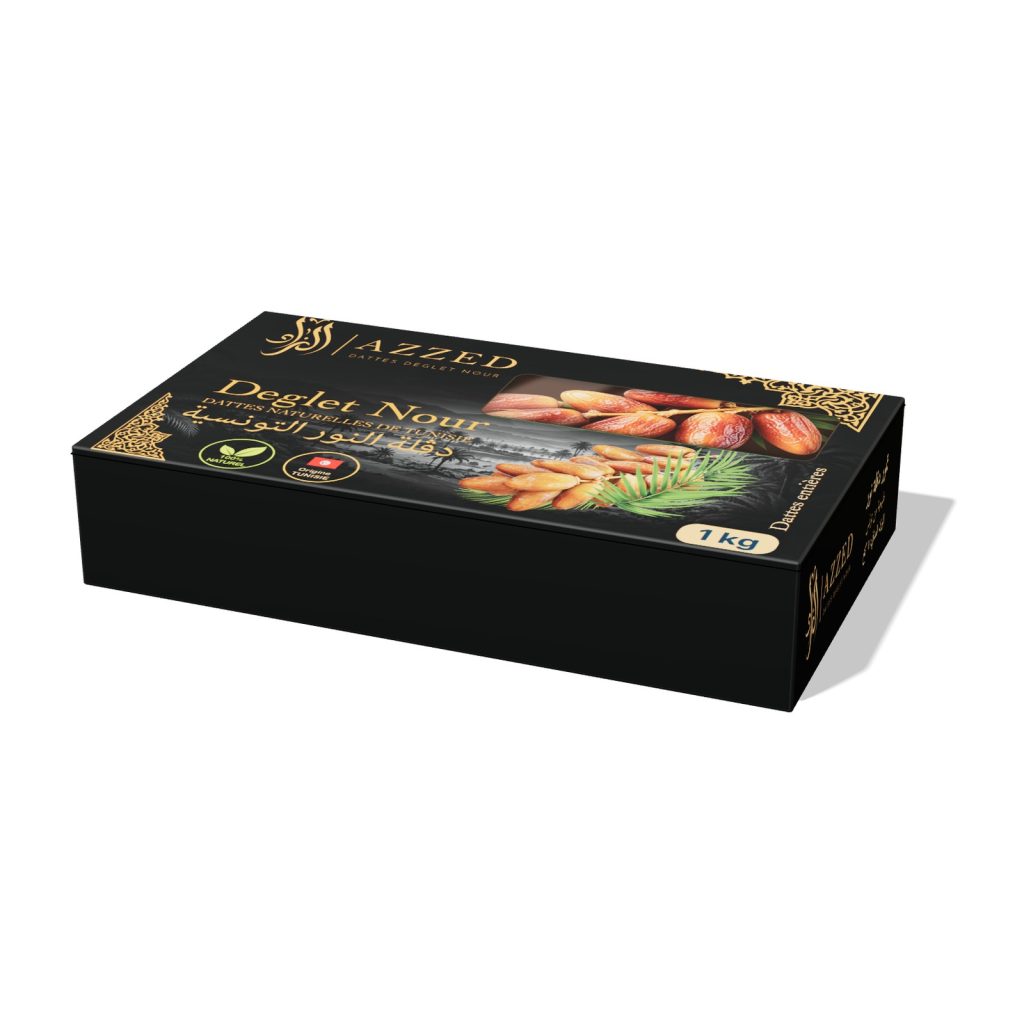
Standard dates are the most straightforward to store. In closed boxes or bulk cartons, kept cool and dry, they are generally the most forgiving format. Watch for sugaring and darkening on lots held for a long time, and keep bulk cartons well closed after opening.
Branch dates
Branch dates are bought for their appearance, so storage conditions show quickly. Dry air can make the strands brittle; rough handling and repeated moves cause fruit to drop from the strands. Store them in their cartons, avoid crushing, handle as little as possible, and plan them for sale periods where their presentation adds value, such as gift seasons.
Arjoun
Deglet Nour Arjoun is the whole bunch, up to about 20 kg. It is a striking display product, but it needs space, careful handling and attention to air circulation around it. Ask the supplier how the bunch is protected for transport and how long it is generally expected to keep its appearance in your conditions, and plan its sale accordingly.
Pitted dates (on request)
Pitted dates have an opened fruit, so they can be more sensitive to moisture, stickiness and contamination than whole dates. Keep packs closed and cool, and follow the storage instructions agreed with the supplier.
For more on the differences between these formats, see Deglet Nour Grades Explained.
Planning storage around the season
Storage and buying are linked. The Deglet Nour harvest in Tunisia generally runs from October to December, and demand in many markets peaks before Ramadan and the year-end holidays. Importers who buy once a year must hold stock for many months, which makes cold storage more important. Importers who split their purchases into two or three orders can keep stock fresher and often manage with simpler storage.
When you plan your orders:
- match quantities to your storage capacity, not just to your sales forecast;
- consider staggered deliveries if your storage is limited;
- keep a buffer for the peak, but avoid holding large volumes of a single lot through a warm season without suitable conditions.
Our article Planning Your Ramadan 2027 Date Stock offers a detailed timeline for the next peak.
Helping your customers store dates well
Your responsibility does not end when the pallet leaves your warehouse. Retailers and delicatessens often store dates in small back rooms and display them under warm lights. A short note to your customers can prevent many complaints:
- keep stock cool, dry and away from sunlight;
- do not store dates next to strong-smelling products;
- rotate shelf stock and put older packs in front;
- for loose displays, cover the fruit and refill in small quantities;
- for branch dates and Arjoun, handle gently and avoid repeated moves.
Customers who sell your dates in good condition sell more of them and reorder sooner.
Common storage mistakes
- Storing next to the heating or under a hot roof in summer.
- Taking goods out of cold storage and opening them immediately in a warm room.
- Placing pallets directly on the floor or against an outside wall.
- Ignoring a single infested carton, which can spread to the rest of the stock.
- Mixing lots on the same pallet without labels.
- Never opening a carton between arrival and sale.
How Azzed approaches storage with its buyers
Azzed is a Tunisian Deglet Nour brand from the oases of Douz and Kébili, in the Nefzaoua region of southern Tunisia. We are still developing our export activity and do not claim otherwise. What we can do is study every request carefully, including small and mid-sized ones, and take your real conditions into account.
When you contact us, tell us:
- how long you expect to hold the stock before selling it;
- whether you have cold storage or only an ambient store;
- which presentations you are considering: standard dates, branch dates, Deglet Nour Arjoun or pitted dates on request;
- your target delivery period.
With this information, we can discuss packaging, timing and the size of each delivery honestly. See our Products and Quality pages for more about our dates.
Frequently Asked Questions
How long can imported Deglet Nour dates be stored?
It depends on the moisture level of the lot, the packaging and your storage conditions. Cool, dry and stable storage, and cold storage for longer periods, generally extends the commercial life of the fruit. Always follow the best-before date and the storage instructions agreed with your supplier.
Is it normal to see white spots on stored dates?
White crystalline spots, often called sugaring, can appear on dates over time and with some storage conditions. They are natural sugars rather than mould, but they affect appearance. Mould usually looks fluffy or powdery and smells musty. If you are unsure, set the lot aside and ask your supplier and your food safety adviser.
Can dates be frozen?
Freezing is used by some businesses for long holding, but it changes handling and thawing needs, and it is not suitable for every presentation. Discuss it with your supplier and adviser before trying it on a commercial lot.
Do branch dates need different storage from standard dates?
The basic conditions are the same: cool, dry and stable. Branch dates need more careful handling, because the strands can become brittle and fruit can drop with repeated moves.
Should I tell my supplier about my storage conditions?
Yes. It helps the supplier recommend packaging, delivery sizes and timing that suit your warehouse. At Azzed, we ask about it when we prepare a quotation.
How do I discuss a first order with Azzed?
Use our contact form or message us on WhatsApp at +216 52 146 101. Mention your market, the presentations you are interested in and your storage set-up.
Further reading
Conclusion
Storing Deglet Nour well is mostly a matter of discipline: keep the fruit cool, dry and stable, protect it from odours and pests, avoid condensation, rotate on a first expired, first out basis, and open a carton regularly to see how each lot is ageing. These habits protect the quality you paid for and the trust of your customers.
If you are preparing a first import of Tunisian dates and want a supplier that listens to your real constraints, including storage, we would be glad to hear from you. Request a quote, visit our Export page, or message us on WhatsApp at +216 52 146 101.
Read next: How to Evaluate Deglet Nour Samples Before Your First Import Order