Summary
- Deglet Nour and Medjool are the two date varieties most buyers know by name, but they are very different products that meet different customer expectations.
- Deglet Nour is medium-sized, semi-soft and translucent, with a delicate, honey-like sweetness. It is versatile — a snack, a cooking ingredient and a traditional fast-breaking food — and is usually the more affordable of the two.
- Medjool is large, very soft and rich, with a caramel-like taste. It is typically positioned as a premium, indulgent product and sold at a higher price per kilo.
- For most small and mid-sized retailers and importers, the question is not “which one?” but “in what proportion?”. Deglet Nour usually drives volume; Medjool adds a premium line.
- Deglet Nour itself comes in different presentations — standard (loose), branch and whole bunch (Arjoun) — which lets you cover several price points with one variety.
- Azzed supplies Tunisian Deglet Nour from the oases of Douz, in southern Tunisia. If you are building or expanding a date range, request a quote.
Why this comparison matters for buyers
Walk into a grocery store in Europe, North America or the Gulf and you will often find the same two names on date packs: Deglet Nour and Medjool. For shoppers, they are simply “dates”. For buyers, they are two different categories with their own customers, price points, uses and logistics.
Choosing the wrong mix can mean slow-moving stock, disappointed customers or a range that misses a whole segment of your market. Choosing the right mix can turn dates into a reliable, year-round category with strong seasonal peaks.
This guide compares the two varieties from a buyer’s point of view: what customers expect, how each variety is used, where it fits in your range and what to check when sourcing. If you are new to Tunisian dates, you may also want to read Deglet Nour Grades Explained: Standard, Branch and Arjoun Dates.
Two varieties, two identities
Deglet Nour: the “date of light”
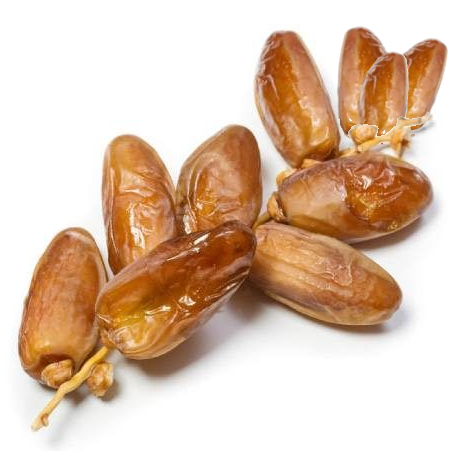
Deglet Nour is the flagship variety of Tunisia, where it represents the large majority of national production. It is also grown in Algeria and, on a smaller scale, in other regions such as California. Its name is often translated as “date of light” or “finger of light”, because a ripe fruit held against the sun looks translucent.
Typical characteristics:
- medium size, elongated shape;
- semi-soft texture — tender but not sticky;
- light amber to golden colour, often slightly translucent;
- delicate, honey-like sweetness, lighter than very soft varieties;
- sold whole with the stone, pitted, loose, on the branch or as whole bunches.
Learn more on our page Deglet Nour Dates.
Medjool: the “king of dates”
Medjool originated in Morocco and is now widely grown in several regions, including the United States, the Middle East and North Africa. It is often marketed as the “king of dates”.
Typical characteristics:
- large size, plump and wide;
- very soft, moist, almost creamy texture;
- dark brown colour, often with wrinkled skin;
- rich, caramel-like sweetness;
- usually sold whole, often in premium packaging.
Side-by-side comparison
| Deglet Nour | Medjool | |
|---|---|---|
| Size | Medium | Large |
| Texture | Semi-soft, tender | Very soft, moist |
| Colour | Light amber to golden, translucent | Dark brown |
| Taste | Delicate, honey-like | Rich, caramel-like |
| Main uses | Snacking, cooking, baking, breaking the fast, gifts (branch/bunch) | Premium snacking, gifts, stuffed dates |
| Typical price position | Accessible to mid-range (premium for branch/bunch presentations) | Premium |
| Handling | Robust, easy to pack and stack | More delicate because of its softness |
| Presentations | Loose, pitted, branch, whole bunch, consumer boxes | Mostly loose whole fruit, premium boxes |
These are general characteristics. Quality, size and texture vary from one lot to another for both varieties, so always judge actual samples.
How customers use each variety
Everyday snacking
Both varieties work as snacks, but they appeal to different habits. Deglet Nour suits customers who eat dates regularly — a few at a time, with tea or coffee, in a lunch box. Its lighter sweetness makes it easy to eat every day. Medjool is more of a treat: one or two large, rich dates as a dessert or an energy snack.
Cooking and baking
This is where Deglet Nour has a clear advantage. Its firmer, less sticky flesh is easier to chop, slice, fill and bake. Bakeries, pastry makers and home cooks use it in cakes, biscuits, energy balls, sauces and traditional North African pastries. Medjool can be used in recipes too, especially when blended into pastes or smoothies, but its softness and higher price make it less practical as a standard ingredient.
Ramadan and religious festivals
In many Muslim communities, dates are the traditional food for breaking the fast during Ramadan. Families buy them in larger quantities during that month. Deglet Nour, with its balance of quality and price, is a natural choice for this volume demand, while Medjool and premium Deglet Nour presentations are popular for gifts and for the table when guests visit. Our article Planning Your Ramadan 2027 Date Stock explains how to prepare for this peak.
Gifts and premium displays
Medjool is often chosen for gift boxes because of its size. But Deglet Nour on the branch and whole bunches (Arjoun) are just as striking — and they tell a story of origin that many customers love. See our pages Branch Dates and Deglet Nour Arjoun.
Where each variety fits in your range
The volume driver: Deglet Nour
For most stores serving a mixed customer base, Deglet Nour is the backbone of the date category. It sells all year, it serves several uses, it handles well in storage and transport, and its price position makes repeat purchases easy.
A simple Deglet Nour offer could include:
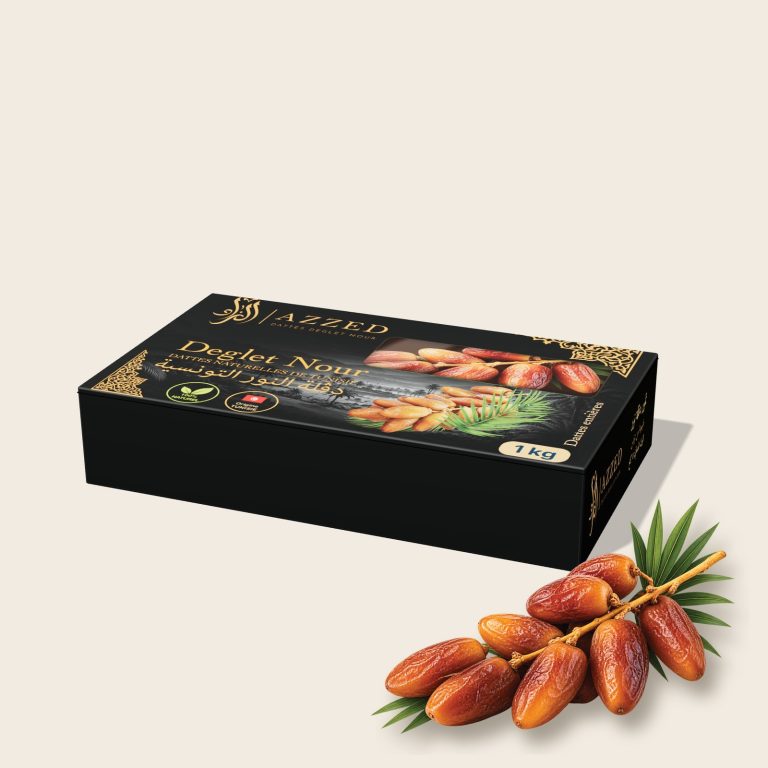
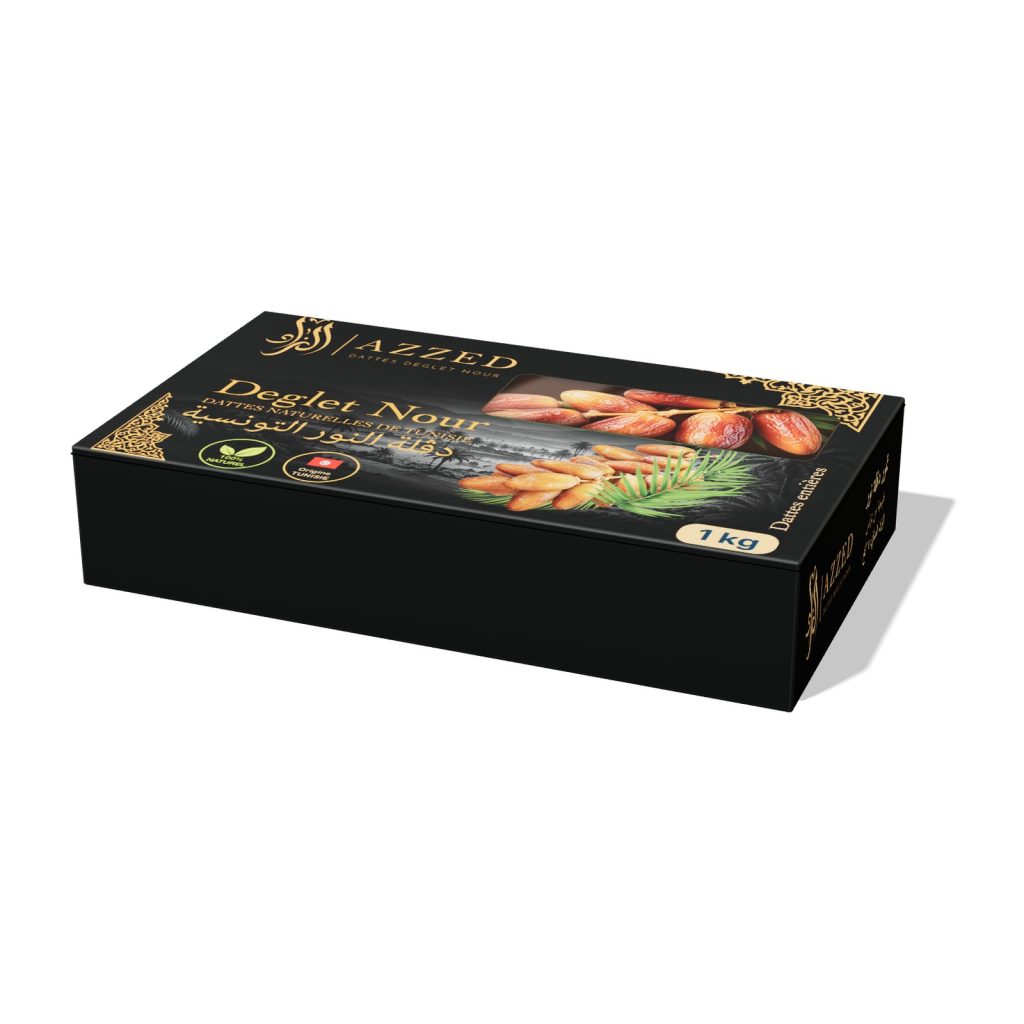
- a consumer pack (for example our 1 kg box) for everyday shoppers;
- larger packs for families and Ramadan buyers;
- a branch presentation for seasonal and gift displays.
See all our formats on our Products page, and loose fruit on Standard Dates.
The premium line: Medjool
Medjool works best as a premium complement: a smaller quantity, positioned higher, for customers who want a large, indulgent date or a gift. It can lift the perceived value of your whole date section.
Covering several price points with one variety
One advantage of Deglet Nour is that a single variety can cover several price levels through its presentations:
- Standard (loose) — everyday price;
- Branch — mid-premium, gift-friendly;
- Whole bunch (Arjoun) — premium display and gifting.
For a small buyer, this keeps sourcing simple: one supplier, one variety, several shelf positions.
What your customers will ask you
Retail staff often hear the same questions. Being ready with simple answers helps sales.
- “What’s the difference between these dates?” — Deglet Nour is lighter, tender and less sweet; Medjool is bigger, softer and richer.
- “Which one is best for cooking?” — Deglet Nour, because it holds its shape and is easier to chop.
- “Which one should I buy for Ramadan?” — Deglet Nour for the daily table, a premium presentation for guests and gifts.
- “Do they have stones?” — Usually yes, unless the pack says pitted.
- “How do I store them?” — In a closed container, cool and dry; in the fridge for longer storage.
Merchandising tips: how to present both varieties
How you display dates has a strong influence on what customers buy. A few simple ideas work well for small stores and specialty shops:
- Group the category. Place all your dates together rather than scattering them across aisles. Customers compare more easily and often buy a second pack.
- Explain the difference on the shelf. A small sign — “Deglet Nour: light, tender, perfect with tea and for baking” / “Medjool: large, soft, rich” — answers the most common question before customers have to ask.
- Show the origin. Many customers like to know where their food comes from. “Deglet Nour from the oases of southern Tunisia” is a simple, credible message that supports your price.
- Use branch dates as a visual anchor. A few packs of dates on the branch at eye level draw attention to the whole section, even if most sales are loose fruit.
- Create a seasonal display. Before Ramadan and year-end holidays, move dates to a front-of-store or end-of-aisle position, with larger packs for families and premium presentations for gifts.
- Suggest uses. Recipe cards, pairing ideas (tea, coffee, cheese, nuts) or a “stuffed dates” suggestion help customers buy more and come back.
These small actions cost little and can make dates one of the most rewarding categories in a specialty or ethnic food store.
Sourcing tips for small and mid-sized buyers
Whichever variety you choose, the basics of good sourcing are the same:
- Ask for samples and compare them side by side with what you currently sell.
- Agree a written specification: variety, presentation, crop year, texture, packaging, labelling.
- Check the season: Deglet Nour is harvested from roughly October to December; plan your orders around harvest and your own demand peaks.
- Check documents and labelling rules for your country with your customs broker.
- Start with a trial order before committing to larger volumes.
Our detailed checklist is in Sourcing Tunisian Deglet Nour Dates as a Small Importer. You can also read about how we sort our harvest on our Quality page.
Storage and shelf life
Both varieties keep well when stored properly, but there are differences:
- Deglet Nour, being semi-soft, is relatively robust. Stored cool and dry in closed packs, it keeps its quality well; refrigeration extends its life further.
- Medjool, being very soft and moist, is more sensitive to heat and humidity and is often kept chilled.
For both: avoid temperature swings (they cause condensation and sugar crystallisation), keep packs closed and rotate stock on a first-in, first-out basis.
Frequently asked questions
Is Deglet Nour cheaper than Medjool?
In general, yes: Deglet Nour is usually positioned at a more accessible price per kilo, while Medjool is positioned as a premium product. Prices vary with season, quality, presentation and market.
Which variety sells better?
It depends on your customers. In many mixed-customer stores, Deglet Nour sells in higher volumes thanks to its versatility and price, while Medjool performs well as a premium and gift line.
Can I sell both from the same supplier?
Some suppliers offer both. Azzed specialises in Tunisian Deglet Nour, in several presentations.
Which variety is better for baking?
Deglet Nour, because its firmer flesh is easier to chop and holds its shape in recipes.
Are pitted Deglet Nour dates a good option for retail?
Pitted dates are convenient for customers who use dates in recipes or eat them on the go, but they are a different product with different handling and shelf-life considerations. Whole dates with the stone remain the reference for most retail ranges; discuss pitted options with your supplier if your customers ask for them.
Can Deglet Nour replace Medjool in a gift box?
Yes, especially in branch or whole-bunch presentations, which are visually striking and tell a strong story of origin. Many customers appreciate their lighter sweetness.
Do you offer samples of Deglet Nour?
Tell us about your business and we will discuss samples with you: WhatsApp +216 52 146 101 or sales@azzed-dattes.com.
Conclusion
Deglet Nour and Medjool are not competitors so much as complementary products. Medjool brings size and indulgence; Deglet Nour brings versatility, everyday appeal, a strong cooking role and the ability to cover several price points through its presentations.
For most small and mid-sized buyers, the most effective date range starts with a solid base of Deglet Nour — loose fruit and consumer packs — then adds branch dates, whole bunches or Medjool for premium and seasonal sales.
Azzed is a Tunisian Deglet Nour brand from the oases of Douz, already established in its home market and now looking for small and mid-sized buyers abroad. Request a quote, visit our Export page, or message us on WhatsApp at +216 52 146 101.
Read next: Planning Your Ramadan 2027 Date Stock: A Timeline for Importers and Retailers.